Retrospective 2025
Tears and Snot – The Aesthetics of Grand Emotions in Melodrama
Grand emotions. Time and again, we seek them out in the cinema—a medium of immense power. There, we experience them with an intensity that sometimes transcends real life. It is precisely for this reason that we feel truly alive in the movie theater—that we experience what it means to be human.
Melodrama often moves us to tears—sometimes to intense, uncontrollable sobbing. But how is this possible? Why do we empathize so deeply with the characters? After all, we know that films are artistic constructs—that the hardships depicted are, in fact, staged destinies. Artistic truth seems to be the key. And, of course, cinema employs specific techniques designed to bring us to tears. But why do we, as an audience, subject ourselves to this? Do we actually enjoy it? Do we “Feel Good?!,” as our annual theme asks?
Following last year’s focus on the human body, this year we turn to emotions. Melodrama tells its stories entirely through emotion, bringing internal, psychological conflicts to the fore. This is particularly compelling because film, as a visual medium, typically leans toward depicting external action; portraying inner, psychological processes presents a unique challenge. Consequently, melodrama demands exceptional performances from its actors. Furthermore, the set design, the spaces, and the music take on added significance in this context—each becoming a mirror of the soul.
The emotions within melodrama are grand, often pushed to their absolute extremes; the style is heightened, resulting in a cinema of excess. Faced with the failure of the protagonists, one is prompted to question the validity of their aspirations. What is certain is that their emotions frequently place them at odds with society and its established values—a conflict the characters must navigate within themselves. As Georg Seeßlen observed, melodrama functions as a form of social critique, articulated in the name of individual happiness. Much like its close relative, film noir, this genre brings uncomfortable truths to the surface—regarding class relations or the role of women, for instance. For a long time, these films—almost exclusively directed by men—focused primarily on the personal dramas of female characters. Time and again, these figures dream of lives unlived, of lives that are impossible—and, in the process, they risk being shattered by reality.
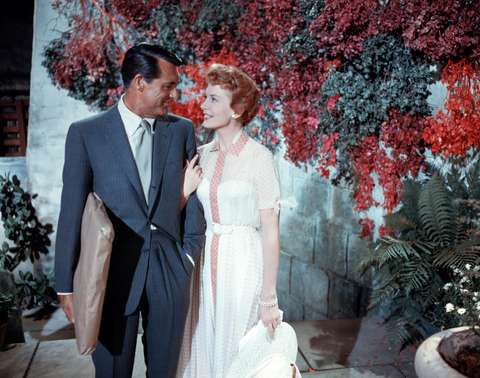
The retrospective comprises twelve works. Three key American films—Michael Curtiz’s *Mildred Pierce* (1945), Douglas Sirk’s *All That Heaven Allows* (1955), and Leo McCarey’s *An Affair to Remember* (1957)—serve as a starting point, acknowledging Hollywood’s role in shaping the style of this "cinema of emotion." Yet, filmmakers across the globe have embraced the melodramatic form. The program travels to Japan with Kozaburo Yoshimura’s *Night River* (1956), while Egyptian directorial icon Youssef Chahine depicts the North African metropolis in *Cairo Station* (1958) as if it were a fever dream. Ingmar Bergman’s *The Passion of Anna* (1969) explores suffering and violence on a remote Swedish island, and Terence Davies’ *The Long Day Closes* (1992) offers a glimpse of 1950s Liverpool. Through Maggie Cheung, we are taken from Hong Kong on a journey across the globe. Meanwhile, both Lars von Trier and Felix van Groningen push this cinema of emotion to the very brink of manipulation—to the point where it threatens to burst apart.
One way or another, by the end, we all seem inclined to join in with the Bryan Ferry song featured on the soundtrack to *In the Mood for Love* (2000): "If there's a cloud above / If it should rain, we'll let it / But for tonight, forget it / I’m in the mood for love."
An overview of the films in the 2025 retrospective:
›Night River‹ Kōzaburō Yoshimura, Japan 1956
›The Passion Of Anna‹ Igmar Bergmann, Schweden 1969
›Rosa La Rose - Fille Publique‹ Paul Vecchiali, Frankreich 1986
›Mildred Pierce‹ Michael Curtiz, USA 1945
›The Long Day Closes‹ Terence Davies, Vereinigtes Königreich 1992
›In The Mood For Love‹ Wong Kar-Wai, Hongkong 2000
›The Broken Circle‹ Felix van Groeningen, Belgien 2012
›Cairo Station‹ Youssef Chahine, Ägypten 1958
›Hongkong Love Affair‹ Peter Ho-Sun Chan, Hongkong 1996
›Breaking The Waves‹ Lars von Trier, Dänemark 1996
›All That Heaven Allows‹ Douglas Sirk, USA 1955
›An Affair To Remember,‹ Leo McCarey, USA 1957